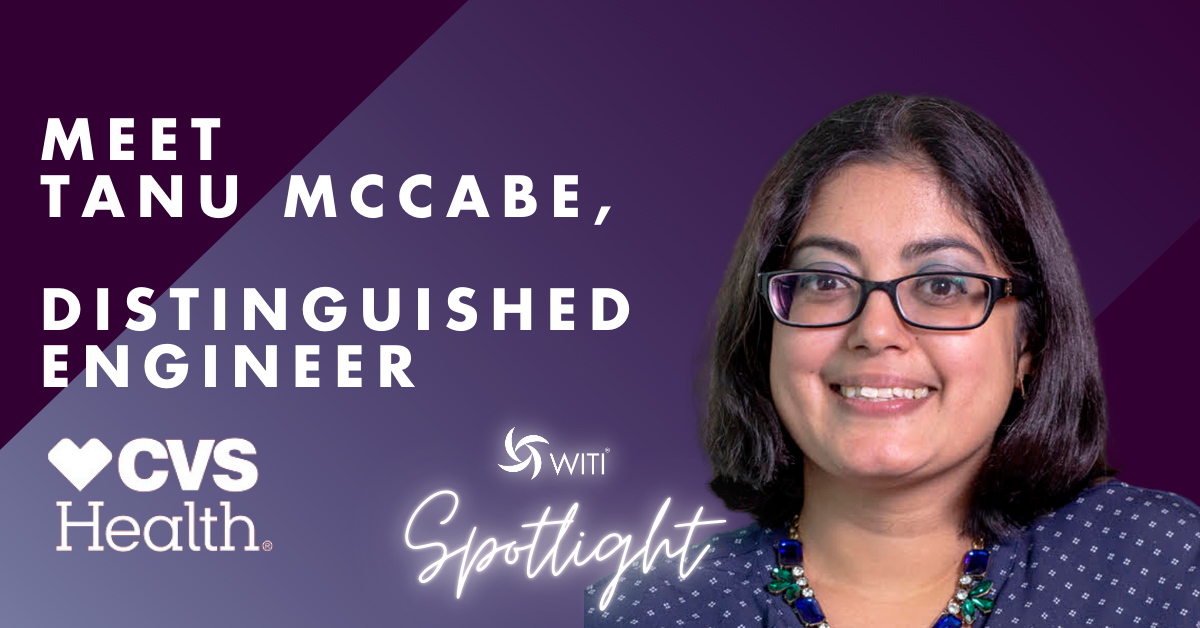
Tanu's career journey, from a supply chain consultant to a federal contractor and now a cloud strategist, showcases her resilience and adaptability. An O’Reilly author, she emphasizes the importance of communication, problem-solving, and understanding business needs. Discover her career insights and advice in our latest Spotlight article.
Did you ever see yourself in the professional role you have now? Where did you see your career path originally taking you?
No, my career has been rather unpredictable, with career changes initially driven by personal need, and then only later by what I wanted.
I graduated college as a computer engineer, and my first job was as a supply chain management consultant because I needed a job that let me live anywhere. The one connection to my interests was that supply chain is a network, and I’ve always enjoyed networks.
Next, I became a federal contractor because I moved to Washington, D.C. Being local to DC and doing something with computers were my only requirements. I grew along the management track for data center virtualization projects that ultimately lead to projects relating to the cloud and DevOps.
I was so excited by cloud and DevOps, that I wanted to be completely immersed in it. Moreover, I realized that I wanted to be in the field as a technologist more so than as a manager. That is what lead me to the individual contributor path specializing in cloud, which eventually opened doors into becoming an architect and leading strategy.
In summary, it took me a while - both time and experience - to figure out what made me happy. If you’re like me in that you don’t quite know exactly what you want to do, I would tell you not to worry - just do things, learn things, and be open to new opportunities. You’ll eventually figure out what does and doesn’t work for you.
What is one thing you are proud of and one thing you are grateful for?
I am proud of overcoming some of my fears and am grateful for my family and friends for helping me do just that.
A year or so ago, my daughter asked what was stopping me from achieving my childhood dream to become a published author. I realized that it was fear - fear of not being good enough, fear of rejection, fear of sustaining quality writing.
So, because I want my children to overcome fear, I decided to lead by example. Thanks to leveraging my network for connections and feedback to strengthen my book proposal, and my family’s support of my endeavors, I am proud to say that I am now an O’Reilly author, with my book, “Fundamentals of Enterprise Architecture” available in early release on their online platform, expected to publish in book form later this year.
What professional skills have you found to be the most beneficial for your career?
First and foremost, communication. No matter how many great ideas I have, it does no good if I cannot communicate those ideas to other people and gain their alignment and support. I have learned over time and through experience how to communicate and tailor messages to varied audiences. It is still a skill that I work on continuously improving.
Second, understanding business needs and business benefits. All technical solutions and strategies need to deliver business value. Being able to quantify problems and impacts has been enormously helpful to me, especially in my architecture roles, where so much of an architect’s value is intangible.
Third, problem solving. Things are always changing - technologies, organizations, leadership. The one constant is that there are always problems that need to be solved. I’ve learned, again with time and experience, to be a better problem solver, to be more well rounded in my analysis, to learn on the job, to understand my limits and know when to ask others for help and appreciate the diversity of perspective.
As a mom of two, what does it mean to you to be a working mom?
Based on my lifestyle choices, working is an absolute necessity. I value a job that provides the flexibility needed to prioritize my time to achieve my unique definition of work life balance. This definition changes over time as the values that dictate how I want to spend my time evolve. For example, I am now comfortable in setting boundaries such that work and family time do not conflict with each other.
Do you have any female role models or mentors that have made a difference throughout your life or career?
I am lucky to have an older sister who has always been a shining example of formidable courage. We are pretty different in terms of our personalities, but she is, and always has been, a role model for me. Similarly, my mother has been a guiding light.
I am also fortunate to have met several female leaders during my career, who took time out of their busy schedules to mentor me. They gave me great advice, such as learning how to stand up for myself and get credit for my own work, learning how to build confidence as a leader, and learning how to navigate in the complex world of human relationships.
Throughout your many professional experiences, has your gender ever impacted your career?
Yes, there have been several times when being female has been an impediment. For example, at one point I was paid less than my male peers for comparable work and learned the hard way that I needed to be unafraid to negotiate. Another example is when certain colleague disrespected me by taking credit for my work or dismissing me by stating that I was the token female, the token diversity hire. While hurtful, I took that as ammunition to take the high road and be judged on the merits of my work rather than what I looked like or identified with. I realized that I could not control other people’s views. Instead, I could influence their perceptions by establishing a strong brand and reputation. It is this reputation that allowed me to nurture relationships with advocates, and those turned out to be the essential ingredients for moving forward in my career.
What advice do you wish someone had given you as you were starting to develop a career?
I suffered burn out at one point in my career because I made the mistake of conflating my self-worth with professional achievement and giving into my perfectionist and people pleaser tendencies. I learned a lot from this experience, but it would have been nice to avoid such a drastic way to learn that my worth is based on who I am, not what I do, and that I do, in fact, always have a choice. Choice is freedom, even when none of the outcomes are perfect. I wish I had gotten that advice.
Who are your biggest support systems in and outside of work? What makes support systems like these necessary?
My support systems include both humans and tools. For humans, I appreciate my colleagues that make work a joy, and my friends and family who enrich my life. For tools, I’m a big fan of things that increase productivity. I still use pen and paper to prioritize my day and week in an adapted bullet journal format.
It’s funny, it took me a long time to acknowledge that I needed support systems to thrive. For too long, I was quite stubborn about martyring myself, doing it all and doing it all to impossible standards, with little to no aid. Support systems are very necessary for my well-being.
What surprised you in your career?
The journey from knowing the answers to every question, to knowing what questions to ask. This was a significant transformation for me, both in terms of my mindset and my duties. As I grew in my career and was given greater scope and responsibility, it became impossible to know every technical detail of every technology. Rather, I added far more value by being able to see the bigger picture.
What do you value at work?
Creativity, freedom, and integrity are currently my top three. Creativity, in that I believe in the power of ideas. Freedom, in that I am driven to enable people to unleash innovation with human ingenuity and great technology. Integrity, in that I hold myself and others accountable in both action and speech to be transparent and honest.
Learn more about what it's like to work at CVS Health at
jobs.cvshealth.com
Opinions expressed by the author are not necessarily those of WITI.
Are you interested in boosting your career, personal development, networking, and giving back? If so, WITI is the place for you! Become a WITI Member and receive exclusive access to attend our WITI members-only events, webinars, online coaching circles, find mentorship opportunities (become a mentor; find a mentor), and more!
Founded in 1989, WITI (Women in Technology International) is committed to empowering innovators, inspiring future generations and building inclusive cultures, worldwide. WITI is redefining the way women and men collaborate to drive innovation and business growth and is helping corporate partners create and foster gender inclusive cultures. A leading authority of women in technology and business, WITI has been advocating and recognizing women's contributions in the industry for more than 30 years.
The organization delivers leading edge programs and platforms for individuals and companies -- designed to empower professionals, boost competitiveness and cultivate partnerships, globally. WITI’s ecosystem includes more than a million professionals, 60 networks and 300 partners, worldwide.
WITI's Mission
Empower Innovators.
Inspire Future Generations.
Build Inclusive Cultures.
As Part of That Mission WITI Is Committed to
Building Your Network.
Building Your Brand.
Advancing Your Career.


Comments